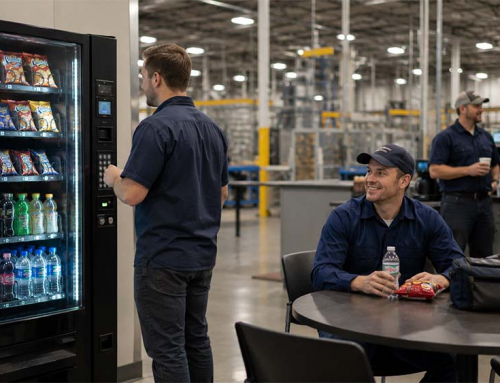

Adding vending services to a workplace, public facility, school, healthcare location, or other property can provide a convenient amenity for the people who use the location. But choosing a vending provider is about more than deciding which machines to install.
The vending company you select will be responsible for stocking products, maintaining equipment, handling service issues, and helping ensure the program continues to meet the needs of your location.
Before signing an agreement, it’s worth asking a few important questions. Understanding how the service works from the beginning can help prevent surprises later and make it easier to find a vending program that fits your needs.
1. What Products and Services Do You Offer?
Start by understanding exactly what the vending company can provide.
Some providers focus primarily on traditional snack and beverage machines, while others offer additional services such as smart coolers, office coffee, water systems, or other refreshment solutions.
Ask about the types of products available as well. Depending on your location, you may want traditional snacks and beverages, bottled water, healthier choices, coffee, energy drinks, or other products.
The right selection will depend on who uses your facility and what they want.
2. How Often Will the Machines Be Serviced?
Ask how frequently the vending machines will be visited and restocked.
A location with heavy traffic may require more frequent service than a smaller facility. It’s also important to understand how the provider handles changes in demand.
If a popular product consistently sells out, can the provider increase the quantity? If certain products aren’t selling, can they be replaced?
A good vending program should be flexible enough to respond to actual purchasing patterns.
3. What Happens When a Machine Breaks?
Even reliable equipment can occasionally experience problems.
Before signing an agreement, find out how service calls are handled. Who should you contact if a machine isn’t working? How quickly does the provider typically respond? Is there a dedicated service team?
You should also ask whether payment systems and other components are covered as part of the service.
Knowing what to expect before a problem occurs can make the process much easier when something does go wrong.
4. What Payment Options Are Available?
Cash is no longer the only way people expect to pay for vending purchases.
Ask whether the machines accept credit and debit cards and contactless payment options such as Apple Pay and Google Pay.
Cashless payment can be particularly important in public-facing locations where visitors may not have cash available.
It is also worth asking whether the payment technology provides useful sales information that can help the vending provider understand purchasing trends and improve inventory management.
5. Can the Product Selection Be Customized?
Every location is different.
The products that work well in an office may not be the same products that sell well at a manufacturing facility, school, recreation center, healthcare location, or public building.
Ask whether the vending company will customize the product mix for your location and whether you can request changes over time.
A good provider should be willing to listen to feedback and use sales information to help determine which products make the most sense.
6. What Type of Equipment Do You Recommend?
Don’t assume that the biggest or newest machine is automatically the right choice.
Ask the provider to evaluate your location and explain what equipment makes sense based on available space, traffic, and the people who will use it.
Traditional vending machines may be appropriate for some locations, while smart coolers or a combination of equipment may work better in others.
The goal should be to select equipment based on the needs of the location rather than simply installing whatever equipment happens to be available.
7. Is There a Cost to the Business?
One of the most important questions to ask is whether your business or organization will pay for the equipment, installation, stocking, and ongoing maintenance.
Many full-service vending programs can provide equipment and service without an upfront equipment cost to the location.
Make sure you understand the financial arrangement before signing an agreement, including whether there are any fees or other charges associated with the service.
8. How Long Is the Contract?
Read the agreement carefully and understand the length of the commitment.
Ask whether the contract automatically renews, how much notice is required to terminate it, and what happens if your needs change.
A clear understanding of the agreement can help prevent misunderstandings later.
Don’t hesitate to ask the vending provider to explain any part of the contract that you don’t understand.
9. Who Will Be My Point of Contact?
It’s helpful to know who you’ll communicate with after the machines are installed.
Will you have a specific representative or service contact? How should you report a problem or request a product change?
A vending relationship works best when communication is straightforward and the customer knows who to contact when something needs attention.
10. Do You Provide Local Service?
Ask where the vending company is based and where it regularly provides service.
A local provider may be able to offer more responsive service and a more personal relationship than a large provider operating from far outside the area.
Local knowledge can also help when product preferences, traffic patterns, and facility needs vary from one community to another.
Don’t Be Afraid to Ask Questions
Choosing a vending provider is a business decision, but it doesn’t have to be complicated.
The best place to start is by understanding what you’re getting: the equipment, products, payment options, service frequency, maintenance, communication, and contract terms.
A vending provider should be comfortable answering these questions and explaining how its service works. If something is unclear, ask for clarification before signing.
Finding the Right Vending Solution for Your Location
Dual State Vending has served businesses and organizations throughout Massachusetts and New Hampshire since 1975. As a locally owned and operated family business, we provide traditional vending machines, cashless payment options, smart cooler technology, and office coffee services.
We understand that a manufacturing facility, office, school, healthcare location, public building, recreation facility, or other location may have very different needs. That’s why we work with customers to develop refreshment solutions based on their specific location and the people who use it.
If you’re considering vending services, asking the right questions at the beginning can help you find a program that provides reliable service and long-term value.
Contact Dual State Vending to discuss your location and learn more about the vending and refreshment options available throughout Massachusetts and New Hampshire.